
Why scammers target older adults, how fraud slips into everyday life, and what we can do to protect ourselves.
There’s something particularly annoying about discovering that someone is trying to steal your money before you’ve even finished your morning coffee.
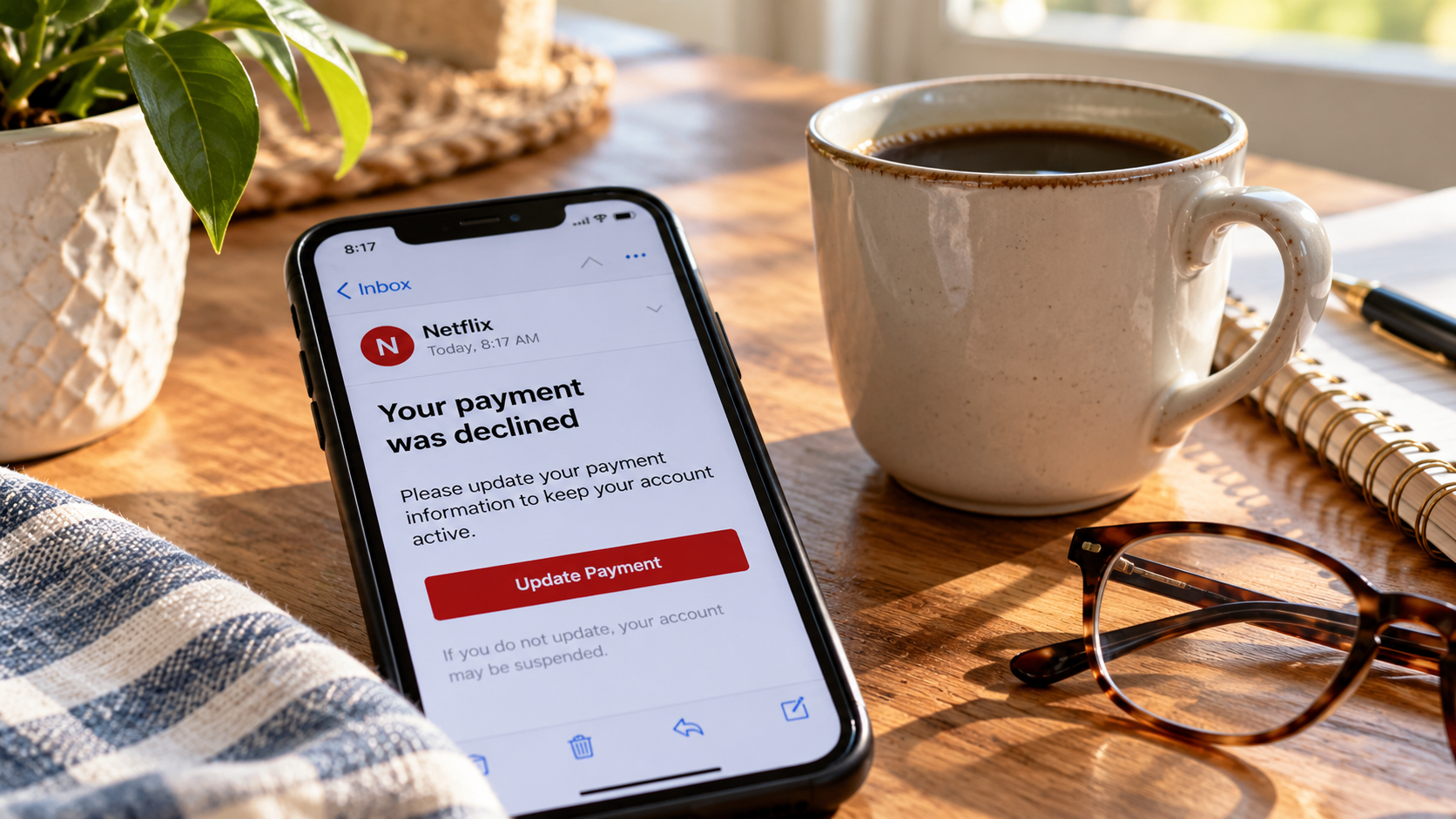
Not long ago, I received an email that appeared to be from Netflix. According to the message, there was a problem with my payment, and I needed to take care of it.
It looked convincing enough that I nearly clicked the link.
Nearly.
After 30 years working in finance, I like to think I know a thing or two about money, suspicious transactions, and situations that don’t quite add up. Yet there I was, one distracted moment away from clicking a link I had no business trusting.
Apparently, the scammers didn’t get the memo about my financial background.
That experience reminded me of something important: You can be smart, financially experienced, and careful—and still find yourself in a scammer’s crosshairs.
The Numbers Are Hard to Ignore
We’ve all heard the warnings. Don’t click suspicious links. Don’t share passwords. Don’t send gift cards to someone claiming to be the IRS.
We know. We’ve heard it.
But the financial damage caused by fraud is becoming increasingly difficult to dismiss.
According to the Federal Trade Commission’s October 2026 report, Protecting Older Consumers 2025–2026:
- $3 billion: The approximate amount adults age 60 and older reported losing to fraud in 2025.
- Fivefold increase: Reported losses among that age group rose from approximately $600 million in 2020 to $3 billion in 2025.
- $2,000: The median reported loss among adults age 80 and older who lost money to fraud in 2025.
And those figures reflect reported losses, not necessarily every dollar stolen.
There’s an important distinction here: older adults report losing money to fraud at lower rates than younger adults. However, when older adults do report a loss, the financial damage tends to be greater.
That matters when the money involved represents years of savings or income intended to last through retirement.
Source: Federal Trade Commission, Protecting Older Consumers 2025–2026.
Why Scammers Target Older Adults—And Why Women Should Pay Attention
Let’s get something straight. Women over 50 are not helpless creatures waiting for someone to explain how the internet works.
Many of us have spent decades managing households, careers, businesses, investments, and the occasional financial mess created by someone else.
We know a few things.
Unfortunately, scammers know a few things, too.
They’re often looking for circumstances they can exploit, not necessarily people who lack intelligence.
Retirement savings and accumulated assets. After decades of working, some older adults have built substantial savings, retirement accounts, or home equity. Those assets can make them attractive targets for investment scams and financial impersonation schemes.
Living alone and making decisions independently. Whether divorced, widowed, or happily single, women managing their own households may not have someone nearby to offer a second opinion when an unexpected financial request arrives. Independence isn’t the problem; sometimes a second set of eyes simply helps.
Loneliness and emotional vulnerability. Romance and friendship scammers may spend weeks or months building trust before asking for money. The desire for companionship is perfectly normal. Exploiting that desire is not.
Major life transitions. Retirement, divorce, bereavement, and changes in health or finances can involve unfamiliar decisions. Scammers may impersonate Medicare, Social Security, banks, or other organizations to create confusion and urgency.
None of these circumstances means a woman is destined to become a victim. And women are not inherently more gullible than men.
The real danger is that criminals have become skilled at making fraudulent requests seem ordinary, believable, or urgent.
The $2,500 Concert I Never Attended
A few years ago, I opened a credit-card bill and discovered approximately $2,500 in charges for concert tickets in Australia.
Australia? I’d never even been there!
What made it particularly surprising was that I rarely used that credit card. I hadn’t received a fraud alert, either. The charges came to my attention only because I reviewed the bill.
I contacted the credit-card company, disputed the purchases, and explained that I hadn’t authorized them. After a relatively brief investigation, the matter was resolved.
To this day, I don’t know how someone obtained my card information. But the experience taught me something important: Even accounts you rarely use need regular attention.
And for $2,500, the least they could have done was send me a concert T-shirt.
The Scams That Deserve a Second Look
Scammers continually change their tactics, but many schemes rely on familiar approaches.
Fake account alerts. Emails or texts claim there’s a problem with Netflix, Amazon, PayPal, or another familiar service. The goal is often to persuade you to click a fraudulent link and enter personal or payment information.
Bank or government impersonation. Someone claims your account has been compromised, your benefits are suspended, or your money needs to be moved immediately. The urgency is deliberate.
Romance and friendship scams. An online acquaintance builds an emotional connection before introducing a financial emergency, investment opportunity, or request for money.
Investment scams. Promises of guaranteed returns, unusually high profits, or exclusive opportunities are designed to make questionable investments sound irresistible.
Fake technical support. A frightening computer warning instructs you to call a number or grant remote access to someone claiming they can fix the problem.
Different stories, similar tactics: establish trust, create urgency, and persuade someone to act before asking questions.
Five Habits That Can Help Protect Your Money
We don’t need to become cybersecurity experts or spend our evenings studying suspicious emails. A few practical habits can make a meaningful difference.
- Review every financial account. Check statements and transactions regularly, including credit cards you rarely use. Set up transaction alerts where available, but don’t rely on alerts alone.
- Verify unexpected messages independently. If a company claims there’s a problem with your account, open its official app or type its website address into your browser yourself. Don’t use the link in the suspicious message.
- Protect your logins. Use strong, unique passwords and enable multifactor authentication. A reputable password manager can help you keep track of everything.
- Refuse to be rushed. Legitimate financial decisions rarely require you to act within the next five minutes. If someone demands immediate payment, secrecy, or a transfer to a supposedly safer account, stop.
- Keep a trusted sounding board. A friend, family member, or financial professional can offer a valuable second opinion when something feels wrong. Sometimes one conversation is enough to spot a problem.
None of these steps guarantees complete protection, but together they make it harder for criminals to succeed.
What If You Discover Fraud?
First, don’t waste time criticizing yourself. Focus on protecting your accounts and limiting further damage.
Contact your bank or credit-card company immediately through its official phone number or app. Report unauthorized transactions and ask what steps are needed to secure the account.
For credit-card billing errors, federal law provides important protections. Under the Fair Credit Billing Act, preserving your rights under the formal billing-error procedure generally requires sending a written dispute to the issuer’s designated address within 60 days after the first statement containing the error was sent. A phone call is helpful, but it doesn’t replace the written notice required for that procedure.
If you’ve entered a password on a suspicious website, change it through the legitimate website or app, and update any other accounts using the same password.
For identity theft recovery guidance, visit IdentityTheft.gov. To report suspected fraud, visit ReportFraud.ftc.gov.
The sooner you respond, the sooner you can begin addressing the problem.
Your Free Scam-Spotting Checklist
Sometimes a simple reminder is exactly what we need before clicking a link, responding to a message, or sharing financial information.
That’s why I’ve created a one-page Scam-Spotting Checklist to help you recognize common warning signs, verify suspicious requests, and remember what to do if something doesn’t look right.
Download Your Free Scam-Spotting Checklist (PDF)
Print it, keep it with your household paperwork, or share it with someone who might appreciate an extra reminder.
Stay Alert, Not Afraid
I have no intention of spending the rest of my life suspicious of every email, phone call, or friendly stranger. And I certainly don’t believe that getting older means we should become afraid of technology.
There’s a sensible middle ground between trusting everything and trusting nothing.
We can shop online, manage our finances, make new friends, and enjoy our independence while remaining alert to suspicious requests.
Being careful doesn’t mean living in fear. It means taking a moment to question something before someone else makes a decision about your money.
After all, we’ve worked too hard for our savings to hand them over to a stranger with a convincing email and an urgent deadline.
And I’d much rather spend my money on a concert I actually get to attend.
The Solo Chapter: 50 and Beyond provides general educational information, not individualized financial or legal advice.