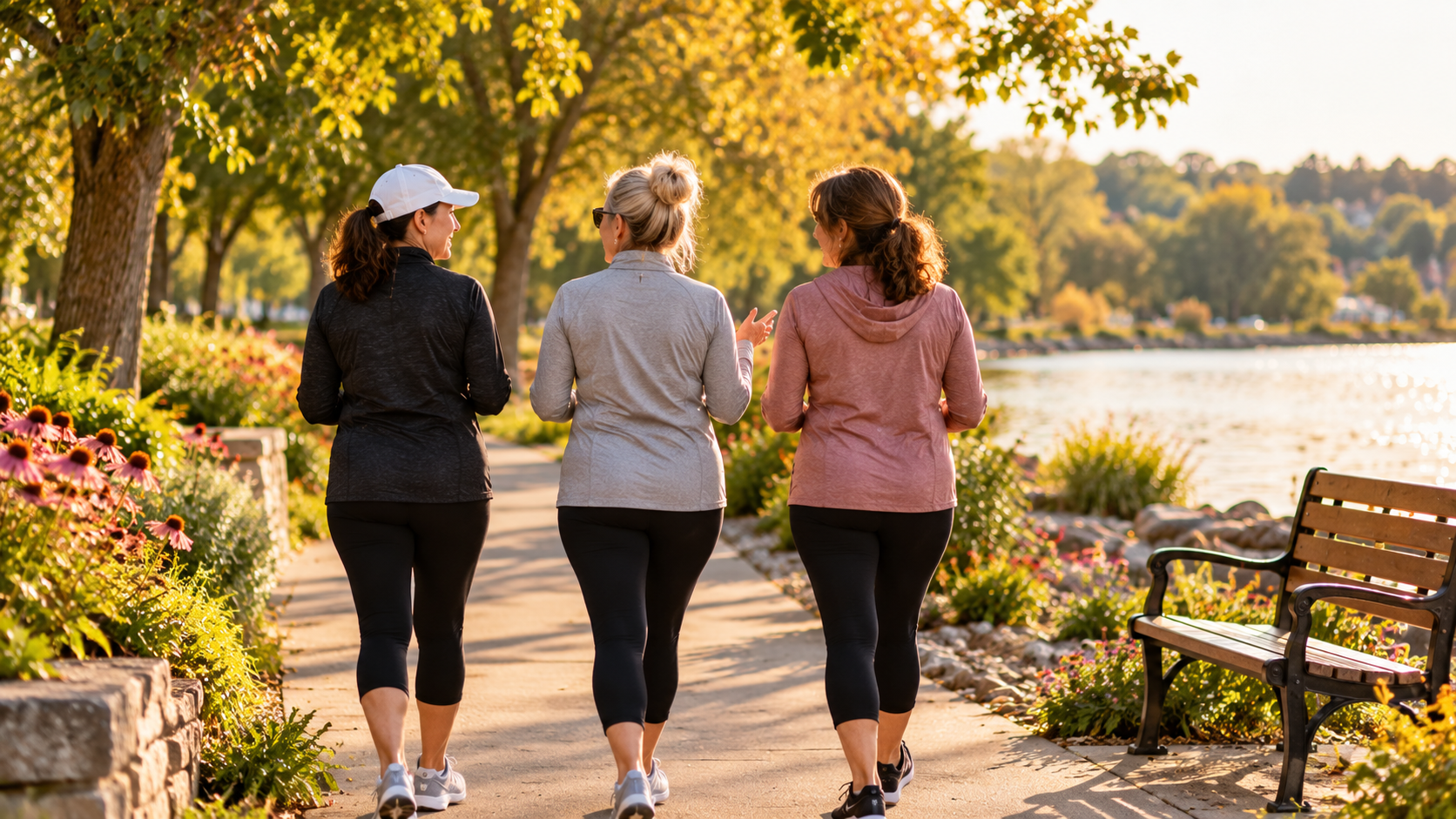

Making time for old friends, finding new ones, and understanding why some friendships change along the way.
Remember when getting together with friends was simple?
Someone would suggest lunch, a movie, or an afternoon shopping, and everybody somehow managed to show up.
These days, arranging lunch with three friends can require the organizational skills of an air traffic controller.
One person is traveling. Another has a family commitment. Someone has an appointment that can’t be moved. And just when you’ve found a date that works for everyone, somebody remembers she’s having the plumber over.
We love our friends. We just apparently need a scheduling department.
But beneath the humor is something worth talking about: friendships after 50 often require more intention than they did when we were younger. Our routines change, our priorities shift, and the places where we once met people may no longer be part of our everyday lives.
And sometimes, even our closest friendships hit a rough patch.
Why Friendships Change as We Get Older
When we’re younger, friendships often develop naturally through school, work, raising children, or neighborhood activities.
We see the same people regularly, and conversations happen almost without effort.
Later in life, those built-in opportunities may disappear. Children grow up. Careers change. People retire, move away, remarry, divorce, or develop different interests.
A friend you once saw every day may now live across the country. Someone who used to have time for spontaneous outings may be caring for a parent or grandchild.
And occasionally, we discover that our priorities no longer line up quite as neatly as they once did.
None of this necessarily means a friendship has failed. Sometimes it simply means the circumstances that supported it have changed.
A friendship can still matter deeply even when it no longer fits easily into your calendar.
When Friendships Change—and Sometimes Fall Apart
Not every friendship challenge is about finding time for lunch.
A close friend and I once had a painful falling-out over politics. We had been very close, which made the disagreement even harder.
We ended up not speaking for almost a year.
That’s a long time when someone has been an important part of your life.
Eventually, we reconciled.
I don’t share that story because I believe every friendship should be repaired, regardless of what happened. Some relationships become unhealthy, and stepping away may be the right decision.
But our experience reminded me that a disagreement doesn’t always have to become the final chapter of a friendship.
Sometimes people need distance before they’re ready to talk again. Sometimes they discover that the relationship matters more than winning an argument.
And sometimes reconciliation requires accepting that you can care about someone without agreeing with everything she believes.
There’s a difference between respecting a person and surrendering your own convictions.
That distinction becomes especially important as we get older and more certain of who we are.
The Unexpected Loneliness of Working From Home
For much of my career, I worked in a corporate environment.
Whatever the frustrations of office life, one thing it provided was regular contact with other people. There were conversations, meetings, shared experiences, and the everyday social moments that come with working alongside colleagues.
When I left that environment to run a business from home, I gained independence and flexibility.
But I also lost much of that casual social interaction.
Working alone can be wonderfully peaceful. You can concentrate, organize your day, and enjoy the absence of unnecessary meetings.
The downside? There isn’t exactly a break room where you can strike up a conversation over a cup of coffee.
And the office holiday party is considerably less exciting when the entire staff consists of you.
It took me a while to appreciate that social contact had been one of the invisible benefits of going to work.
You don’t necessarily notice it until it’s gone.
Making New Friends Without Making It a Project
If you’ve ever been told to “just get out there and meet people,” you know how unhelpful that advice can sound.
Where, exactly, is there?
Friendships usually grow through repeated contact, shared interests, and small conversations over time. They don’t typically appear because we’ve decided that Tuesday will be Friendship Acquisition Day.
A more realistic approach is to spend time in places where you might naturally encounter the same people.
That could mean a class at the library, a walking group, a volunteer opportunity, a community garden, or a hobby you’ve always wanted to explore.
The activity itself should be something you enjoy. Otherwise, you may end up attending six pottery classes, disliking pottery, and wondering why you still haven’t made a best friend.
The goal isn’t to collect acquaintances. It’s to create opportunities for connections to develop.
Start with a conversation. Remember someone’s name. Show up again. Suggest coffee when it feels natural.
And remember that not every friendly encounter needs to become a close friendship. Pleasant acquaintances and activity companions can add a great deal to our lives, too.
The Friendship Calendar Summit
I’ve come to believe that one of the most useful friendship skills after 50 is simply being willing to make a plan.
Not a vague “We should get together sometime.”
An actual plan.
A date. A time. A place.
If everybody’s calendar is complicated, consider making the next arrangement before leaving the current lunch.
It may sound overly organized, but the alternative is often six months of messages saying, “We really need to catch up!”
A standing monthly breakfast or a regular walk can remove much of the scheduling effort. And when a gathering gets canceled, reschedule rather than leaving the friendship floating indefinitely.
At the same time, flexibility matters. People have responsibilities, health concerns, financial constraints, and changing energy levels.
A friend who can’t attend every gathering isn’t necessarily a friend who doesn’t care.
Some Friendships Need a Different Shape
We sometimes hold on to an old picture of what friendship is supposed to look like.
Maybe you once talked every day. Maybe you vacationed together, celebrated every birthday, or spent weekends visiting each other’s homes.
Life changes, and a friendship may need to change with it.
Perhaps now you talk once a month but have wonderful conversations. Perhaps you live far apart and exchange messages more often than visits.
Perhaps one of you is dealing with a difficult season and can offer less than she once did.
That doesn’t automatically diminish the relationship.
The better question may be whether the friendship still offers mutual care, respect, and a sense of connection.
And yes, effort should go both ways. If you’re always the one calling, inviting, and checking in, it’s reasonable to notice that pattern.
Friendship shouldn’t feel like a second unpaid job.
A Little More Intention, a Lot Less Pressure
There’s no required number of friends we should have after 50.
Some women enjoy a wide social circle. Others prefer a handful of close relationships. Some are perfectly content with plenty of time alone, provided they have people they can count on when it matters.
The important thing is to build the kind of social life that actually suits you, rather than the one you think you’re supposed to have.
Reach out to the old friend you’ve been meaning to call. Accept an invitation that genuinely interests you. Try an activity where conversation might happen naturally.
And if there’s a friendship worth repairing, consider whether a gentle first step is possible.
We may not be able to recreate the effortless friendships of our younger years.
But we can create something just as valuable: relationships we choose to nurture because they make our lives richer.
Even if arranging lunch requires three calendars, two reminder texts, and the negotiating skills of a United Nations diplomat.
Some friendships are worth the paperwork.