
One morning, while I was still in bed, one of my smoke detectors started chirping.
Not a polite little chirp either. It was the kind of noise specifically designed to make it impossible to think about anything else.
Fortunately, my daughter was living with me at the time. She got the ladder, climbed up, disconnected the thing long enough for us to figure out what was going on, and eventually replaced the batteries.
My contribution was mostly managerial.
“Did it stop?”
Excellent leadership under pressure.
But later I thought about that ladder. What would I have done if my daughter hadn’t been there?
I probably would have figured it out. That’s what we do when we live on our own. But it reminded me:
You don’t need to know how to fix everything. But you do need to know what to do when something goes wrong.
I have no desire to become a plumber, electrician, roofer or HVAC technician. I do want to understand my home well enough that a chirping smoke detector, leaking pipe or dead furnace doesn’t send me immediately into panic mode.
Because when you live alone, congratulations:
You’re management.
1. Build Your Home Team Before You Need Them
The worst time to start searching for a plumber is when water is actively going somewhere water should not be going.
Keep a list of trusted or researched plumbers, electricians, HVAC companies, handymen, roofers, pest-control companies, locksmiths, appliance-repair companies and garage-door companies as relevant to your home.
A reliable contractor is a relationship worth keeping. Especially one who answers the phone.
2. Know Where Your Main Water Shutoff Is
If a pipe bursts or a fixture starts leaking badly, being able to shut off the water quickly can help limit damage while you’re waiting for professional help.
Find the shutoff before there’s an emergency. If you’re unsure how yours works, ask a qualified professional to show you.
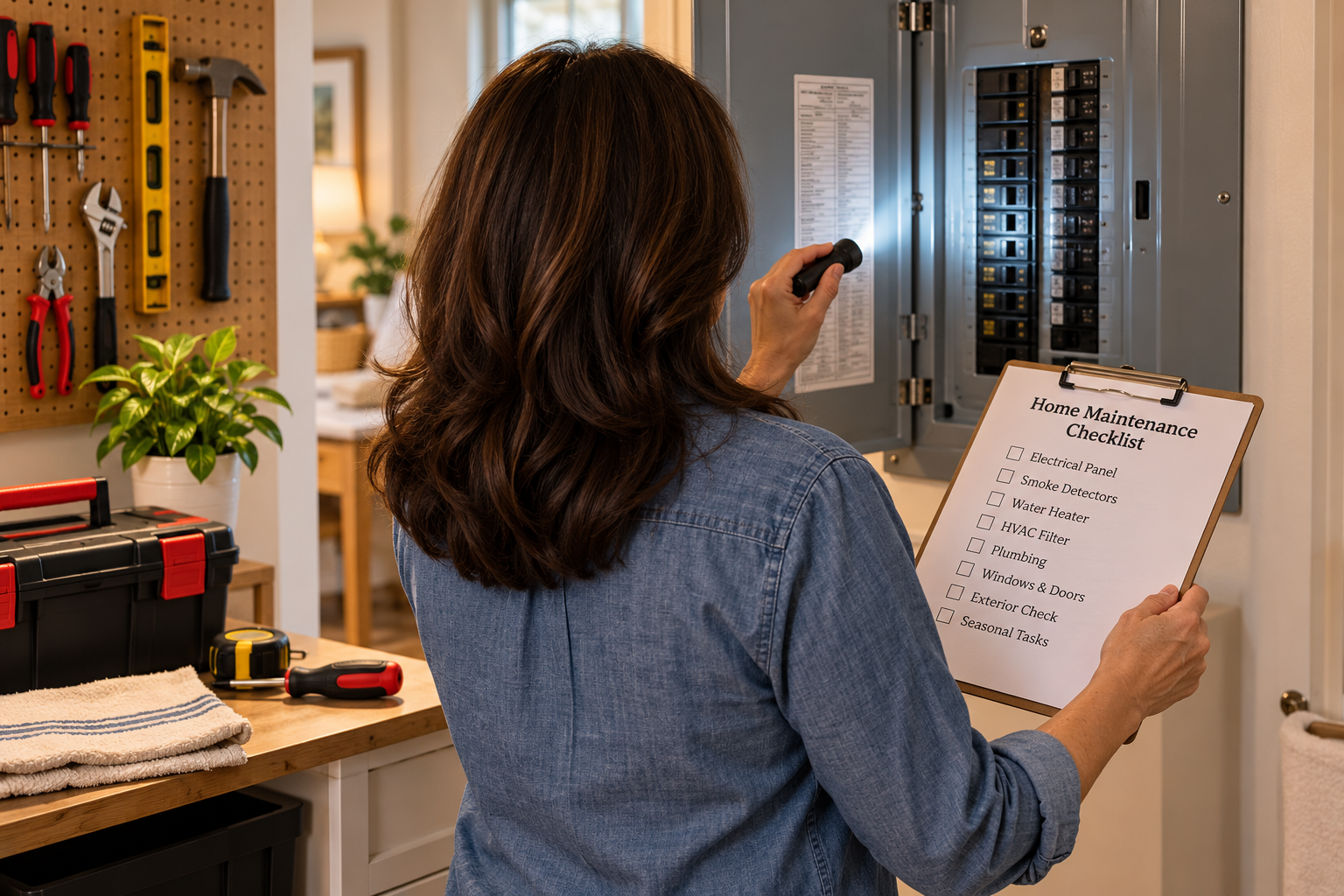
3. Understand the Basics of Your Electrical Panel
Know where your electrical panel is, how the breakers are labeled and which breaker controls major areas or appliances.
I’m not suggesting anyone start doing electrical work after reading a blog article.
Knowing where the panel is: useful.
Deciding you’re suddenly an electrician: less useful.
4. Create a Simple Home-Maintenance Calendar
Homes are very good at quietly needing things.
Filters, gutters, heating and cooling systems, appliances, roofs, windows, plumbing and exterior surfaces all need attention at different times.
Use manufacturer recommendations and the needs of your actual home. Put reminders in a phone calendar, spreadsheet, notebook or checklist.
5. Give Home Repairs Their Own Place in Your Budget
A house doesn’t care whether this is a convenient month for an expensive repair.
The right amount to reserve will differ for everyone. What matters is acknowledging that repairs aren’t really unexpected in the broad sense.
We may not know what will break or when.
But eventually? Something will.
6. Own a Few Basic Tools—and Know How to Use Them
A modest toolkit might include a hammer, screwdrivers, pliers, adjustable wrench, tape measure, flashlight, utility knife, level and a basic drill if you’re comfortable using one.
YouTube has convinced us we can build a deck by Saturday afternoon.
Let’s not get carried away.
7. Take Lighting Seriously
Look at stairs, hallways, entrances and the path from bedroom to bathroom. Better bulbs, night-lights or motion-activated lights can make a home easier and safer to move through.
It’s not glamorous.
Neither is falling over a shoe at 2 a.m.
8. Know Your Smoke and Carbon Monoxide Alarms
The U.S. Fire Administration recommends testing smoke alarms monthly and replacing smoke alarms that are 10 years old. It also recommends smoke alarms inside and outside sleeping areas and on every level of the home.
Carbon-monoxide alarm requirements and recommendations can vary, so check manufacturer instructions and local requirements.
Most importantly, don’t ignore the chirp for three weeks because it’s annoying.
The annoyance is rather the point.
If an alarm sounds, treat it as a potential emergency and follow your household evacuation plan—never assume it’s just a malfunction.
9. Have a Fire Extinguisher—and Know Its Limits
Fire extinguishers are intended for small, contained fires when you have a clear escape route and know how to use the extinguisher properly. If a fire is spreading, producing heavy smoke or putting you in danger, get out and call emergency services.
This is not the moment for heroics.
A house can be replaced.
You cannot.
10. Prepare for a Power Outage Before the Lights Go Out
A basic outage setup might include flashlights, extra batteries, a way to charge your phone, necessary medications, drinking water, nonperishable food and basic first-aid supplies.
Nothing elaborate is required—just enough that losing power becomes an inconvenience rather than an immediate crisis.
11. Use Technology Where It Actually Helps
Depending on your needs, water-leak sensors, smart thermostats, video doorbells, security cameras, smart locks and motion-activated lighting can help.
The refrigerator does not need to send me inspirational messages.
12. Have a Plan for Anything Heavy, High or Ridiculous
Anything involving a high ladder deserves serious consideration. So does moving heavy furniture, lifting large appliances, clearing a roof or tackling repairs requiring strength, specialized equipment or expertise.
I would like to remain on speaking terms with my ladder.
Preferably from the ground.
13. Give Your House a Seasonal Checkup
Look for signs of leaks, loose railings, cracks, exterior damage, doors or windows that aren’t working properly, drainage problems, heating or cooling issues and anything that simply looks different.
You don’t have to diagnose the problem. You’re looking for changes.
Catching something when it’s small is usually preferable to discovering it after it has had six months to become ambitious.
14. Think About Home Security Without Turning Your Home Into a Fortress
Reliable locks, good exterior lighting, sensible habits, awareness of who has keys and perhaps a doorbell camera or security system can help.
Security should support your independence—not frighten you out of enjoying it.
15. Give Yourself Permission to Pay Someone Else
There are jobs I can learn to do myself. There are jobs I might enjoy learning. And then there are jobs where the best use of my time, safety and sanity is paying somebody who already knows what they’re doing.
That’s not failure.
That’s household management.
Sometimes the smartest tool in the house is your phone.
You Don’t Have to Know Everything About Your House
What I want is enough knowledge to recognize a problem, a few basic tools for the things I can safely handle, some money set aside for repairs and a list of trustworthy people for everything else.
I want to know where the water shutoff is. I want the smoke detectors working. I want to know who to call when the furnace stops cooperating. And I want someone else on the ladder whenever possible.
Living independently doesn’t mean doing every job yourself. It means knowing how to get the job handled.
Management is allowed to outsource.
Your turn: What’s the one household problem you wish someone had taught you how to handle before you started living on your own?